

A Smarter, More Complete Approach
One daily formula. Developed with purpose. Backed by science.
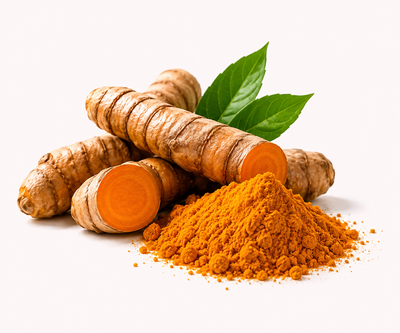
Curcumin
500 mgThe most clinically studied anti-inflammatory compound, supporting the body's natural response to inflammation and helping protect cells from oxidative stress.
Curcumin is the primary active compound in turmeric, and one of the most extensively researched natural compounds for its role in the body's inflammatory response. It's a foundational ingredient in this formula because of how directly it acts on that pathway.
Curcumin has been studied in multiple human clinical trials, with daily amounts ranging from around 500 mg to 1,500 mg. Research consistently points to its role in supporting the body's natural inflammatory response, alongside its function as an antioxidant that helps protect cells from oxidative stress.
500 mg falls within the range studied in human clinical research on curcumin. We chose an amount that's realistic to take consistently every day — consistency matters more than chasing the highest dose that's ever been tested.
This is a curcumin extract standardized to 95% curcuminoids, the concentration most commonly used in published human research. Raw turmeric powder contains a much smaller share of curcuminoids by weight, which is why a standardized extract is used here instead of turmeric spice.
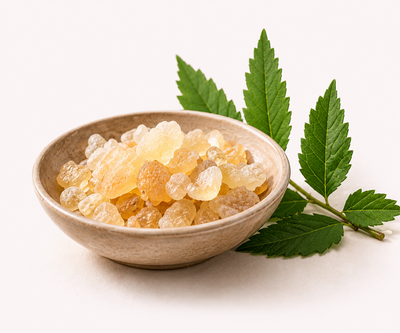
Boswellia Serrata
300 mgA powerful botanical known for its boswellic acids, which help maintain comfort and support the body's natural inflammatory response.
.Boswellia serrata gum resin has a long history of traditional use for joint comfort. Its active compounds, boswellic acids, act on a different part of the body's inflammatory pathway than curcumin — which is why the two are paired here rather than relying on one mechanism alone.
Boswellia extract has been studied in multiple placebo-controlled human trials, with research showing improvements in joint comfort and mobility over periods ranging from 8 to 90+ days. Its boswellic acids are the compounds responsible for this activity.
300 mg per day is within the range used in placebo-controlled human trials on Boswellia extract, taken once daily.
This extract is standardized to its total boswellic acid content — the group of compounds it's researched for, and one of the two standardization methods used across published clinical research on Boswellia.
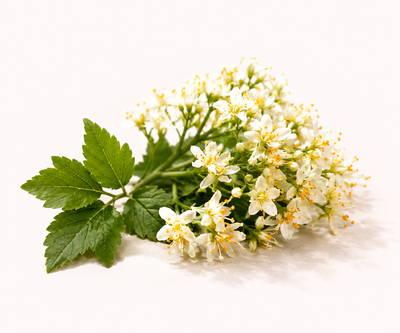
Rutin
300 mgA natural flavonoid that supports healthy blood vessels and microcirculation while protecting cells from oxidative stress.
Rutin is a naturally occurring flavonoid found in foods like citrus fruit and buckwheat. It's included here for its role in supporting vascular health — particularly the strength of capillaries and the tone of small blood vessels, an area where rutin-family flavonoids have been most closely studied.
Much of the strongest clinical research on this flavonoid family has been conducted using a semi-synthetic derivative of rutin, which has shown improvements in microcirculation and vessel-related comfort across multiple placebo-controlled trials. Rutin itself has supporting human data, including research confirming it's well absorbed and metabolized in the body, alongside a broad base of preclinical evidence for its role in capillary and vessel wall support.
300 mg is within the range studied in human research on rutin, including a study confirming meaningful absorption and metabolism at this dose.
This is rutin sourced from Sophora japonica (the pagoda tree flower bud), one of the most common and well-characterized natural sources of rutin used in supplements and research.
Quercetin
500 mgA plant-based flavonoid, studied for its antioxidant and anti-inflammatory properties.
Quercetin is a plant-based flavonoid found in foods like onions, apples, and berries. It's included for its antioxidant activity and its role in ongoing research into the body's inflammatory response.
Quercetin has been studied in multiple randomized, placebo-controlled human trials. The evidence is strongest for its antioxidant activity — including an 8-week trial showing a significant increase in blood antioxidant capacity at 500 mg/day. Its effects on inflammation and immune markers specifically are less consistent: some studies report improvements, others find no significant difference from placebo. We consider the antioxidant research the better-established part of quercetin's profile.
500 mg/day is one of the most commonly used doses in human clinical research on quercetin, including the trial showing increased antioxidant capacity referenced above.
This is standard quercetin sourced from Sophora japonica, the same form and source used in most of the human research behind it — as opposed to sugar-bound quercetin glycosides, which are handled differently by the body.
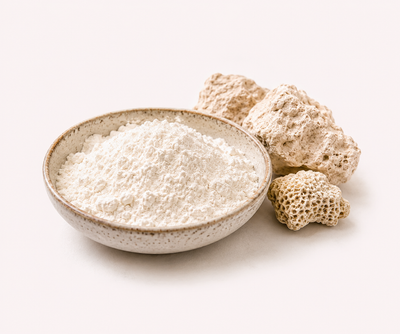
Vitamin D3
75 mcgAn essential vitamin that contributes to the normal function of the immune system and muscle function.
Vitamin D3, or cholecalciferol, is the form of vitamin D your body makes naturally from sunlight — and the form most commonly used in research and supplementation. It plays a central role in calcium absorption, bone health, and immune function, and is one of the most common nutrient gaps, especially with limited sun exposure.
Vitamin D3's role in calcium absorption and bone health is well established in nutrition science. Research into other areas — like vitamin D's effect on vascular or cardiovascular markers — is less settled, with mixed results across trials. We keep our claims focused on the calcium and bone-related roles the evidence most consistently supports.
3,000 IU is above the standard RDA but within the range commonly used in vitamin D research and supplementation for adults, particularly those with limited sun exposure or lower baseline vitamin D levels.
Cholecalciferol (D3) is the form your body produces from sunlight, and research shows it raises and maintains blood vitamin D levels more effectively than D2 (ergocalciferol), the plant-based alternative — which is why D3 is the standard choice in most human studies.
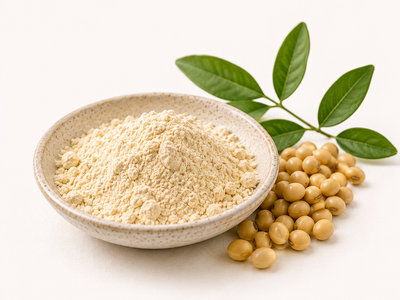
Vitamin K2
100 mcgA vitamin that contributes to the maintenance of normal bones and supports cardiovascular health.
Vitamin K2 (as MK-7) activates proteins in the body responsible for directing calcium to where it's needed — primarily bone. It's paired with vitamin D3 here because D3 increases how much calcium your body absorbs, and K2 plays a role in what happens to that calcium afterward.
Multi-year human trials using higher daily doses of MK-7 (180 mcg and above) have shown support for bone density and bone-strength markers in postmenopausal women. Research on K2 and vascular or artery-related markers is mixed — some trials show benefits in specific populations, others show none. We include K2 for its established, mechanistic role in calcium regulation, not for outcomes that haven't been consistently shown.
90–100 mcg is a widely used everyday amount for maintaining adequate MK-7 status. It's lower than the doses used in the multi-year bone-density trials referenced above, so we're not claiming to replicate those specific results — this amount is intended to support ongoing vitamin K2 status alongside vitamin D3, day to day.
MK-7 is the longer-acting form of vitamin K2 — it stays active in the bloodstream longer than other vitamin K forms, which is why it's the form most commonly used for once-daily dosing in both research and supplements.
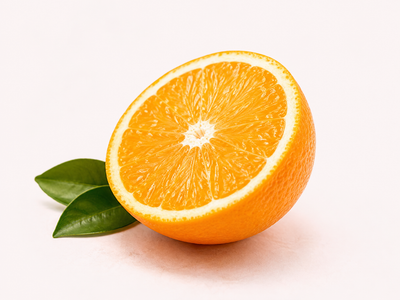
Vitamin C
300 mgA powerful antioxidant that supports collagen formation, immune function and protects cells from oxidative damage.
Vitamin C is an essential, water-soluble vitamin your body can't produce or store — it has to come from diet or supplementation. It plays a well-established role in collagen production, immune cell function, and as an antioxidant that helps protect cells from oxidative stress.
Vitamin C's role in collagen synthesis and immune cell function is well established in nutrition science — this isn't a new or emerging claim. Its effect on the common cold specifically has been studied extensively: a large Cochrane systematic review found that regular vitamin C intake didn't reduce how often people caught a cold, but modestly reduced the duration (around 8% in adults) and severity of symptoms when taken consistently, not just after symptoms started.
300 mg is within the range commonly used in vitamin C supplementation and above the basic RDA (75–90 mg). It's worth noting that several of the trials showing the strongest duration-reduction effect used higher daily amounts (1–2 g); we chose 300 mg as a sustainable daily amount rather than a therapeutic mega-dose, on top of what you already get from food.
This is standard ascorbic acid, the most researched and widely used form of vitamin C in human clinical trials — including the studies referenced above.
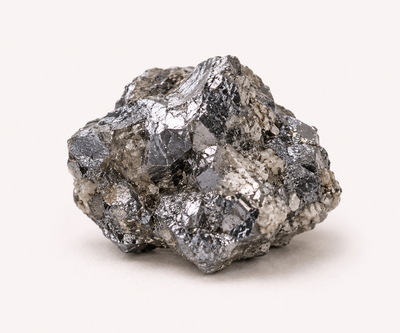
Zinc Bisglycinate
15 mgA highly bioavailable form of zinc, essential for immune health, skin health and cellular protection.
Zinc is an essential trace mineral your body needs for over 200 enzyme reactions, including those involved in immune cell development and function, wound healing, and cellular metabolism.
Zinc's role as an essential cofactor for immune cell function is well established. It's worth noting that the most well-known clinical research on zinc and shortening colds used zinc acetate lozenges at much higher doses (75+ mg/day, dissolved in the mouth) — a different form, delivery method, and dose than what's used here. This product is formulated to support ongoing, adequate zinc status day to day, not to replicate that specific lozenge research.
15 mg is above the basic RDA (8–11 mg) and reflects a daily maintenance amount aimed at supporting healthy zinc status, rather than the much higher short-term doses used in cold-lozenge research.
Zinc bisglycinate is zinc bound to the amino acid glycine (a "chelated" form). Human research comparing zinc forms has found bisglycinate is absorbed more efficiently than common forms like zinc oxide or zinc sulfate, and it's generally gentler on the stomach.
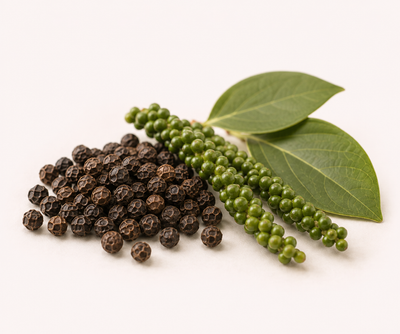
BioPerine® Black Pepper Extract
5 mgA patented black pepper extract containing piperine, shown to enhance the bioavailability and absorption of the nutrients in this formula.
BioPerine® is a patented, standardized black pepper extract containing piperine, its main active compound. Piperine has been researched for its ability to influence how efficiently the body absorbs certain nutrients — which is why it's included alongside curcumin in this formula.
The best-known human study on piperine and curcumin absorption used 20 mg of piperine alongside a high dose of curcumin and found a dramatic, short-term increase in blood curcumin levels. More recent research has produced mixed results on how much benefit piperine adds when paired with standard curcuminoid extracts specifically — some studies show a meaningful effect, others show little to none. We include BioPerine because the mechanism is well-documented, while being transparent that the magnitude of benefit in this exact formulation hasn't been independently tested.
5 mg is a standard commercial BioPerine® amount.
BioPerine® is standardized to a guaranteed piperine content, which is why it's used instead of generic black pepper extract — it ensures a consistent, tested amount capsule to capsule.
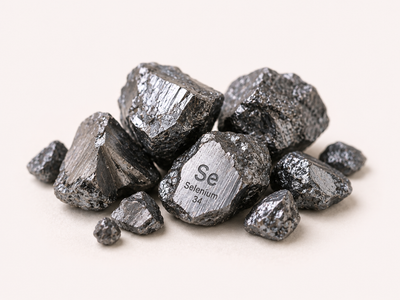
Selenium
60 mcgAn essential trace mineral that supports antioxidant defence and immune function.
Selenium's role in antioxidant enzyme activity and immune function is well established in nutrition science. Research also shows that benefit follows a "just enough is enough" pattern: glutathione peroxidase activity levels off once selenium status reaches an adequate level, and large trials have found no added benefit — and some safety concerns — from high-dose supplementation in people who already get enough. We include a moderate, maintenance-level amount rather than a mega-dose for this reason.
60 mcg is just above the RDA (55 mcg) — enough to support adequate selenium status without approaching the tolerable upper limit (400 mcg). Given that selenium's antioxidant benefit plateaus once intake is adequate, a dose close to the RDA is consistent with the research showing more isn't better here.
L-selenomethionine is the organic form of selenium, the type most naturally found in food and generally recognized as being well absorbed and retained by the body compared with inorganic forms like sodium selenite.
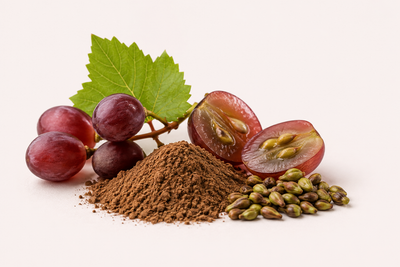
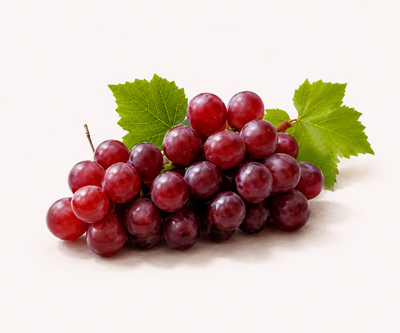
Grape Seed Extract
150 mgA rich source of polyphenols and OPCs (oligomeric proanthocyanidins), known to support vascular health and protect cells from oxidative stress.
Grape seed extract is a concentrated source of proanthocyanidins (OPCs), plant compounds researched for their role in supporting blood vessel and capillary health. It's included as part of this formula's broader circulation-support ingredients, alongside rutin and quercetin
Standardized grape seed extract has been studied in multiple placebo-controlled human trials for vascular and venous-related outcomes, generally at daily doses between 100 mg and 400 mg over several weeks to months, with meaningful improvements reported at doses in and above this range.
150 mg sits within the range studied in human clinical research on grape seed extract for vascular and venous-related outcomes — closer to the middle of that range than the low end. We chose it as a meaningful daily amount that works alongside the formula's other circulation-support ingredients, rather than the highest dose that's been tested.
This is a standardized grape seed extract, meaning it's tested to contain a consistent, defined level of proanthocyanidins — rather than relying on the variable OPC content of raw grape seed.